Does my bare root rose have gall?Updated 10 hours ago
What is gall in roses?
Gall refers to abnormal, tumor-like growths that can form on a rose's roots, stems, or crown. The most common type found on roses is crown gall, caused by a soil-borne bacterium called Agrobacterium tumefaciens. This bacterium is extremely common (like as common as herpes/cold sores or chicken pox/shingles in humans) and likely is already in the native soil somewhere in your yard already. It infects the plant through wounds, stimulating the production of irregular tissue growth. The galls are usually rough, knobby, and woody in texture. They can vary in size, starting small but potentially growing quite large. While a few galls may not seem alarming initially, severe infections can restrict nutrient & water uptake and weaken the plant, making it more susceptible to stress and other diseases.
Are my bare root roses at risk of infection?
Agrobacterium tumefaciens can affect roses, particularly when plants are handled roughly and wounds are left exposed. Grafted roses can be especially vulnerable, as the bacteria may enter through the bud union. Because the bacteria is relatively common, infected plants can occasionally make it through even reputable nurseries despite careful inspection.
To reduce the risk of crown gall, reputable rose growers and nurseries should follow comprehensive prevention and inspection protocols throughout the production process. Propagation cuttings can be treated with products such as Galltroll-A to help prevent infection from the start. Plants should also be carefully inspected at multiple stages of production and handling, particularly during grading, bunching, and order fulfillment.
Additional preventative practices may include regular soil solarization, rotating planting locations, and allowing several years before roses are planted again in the same area. While no protocol can completely eliminate the possibility of crown gall, careful sanitation, preventative treatment, crop rotation, and thorough inspection can significantly reduce the risk of infected plants reaching customers.
How to accurately identify gall.
Over the years, I've received many messages and photos from people confusing galls with normal root growth, particularly in own-root roses. It's crucial for rose gardeners to understand a rose plant's normal anatomy. This knowledge helps accurately distinguish between galls and normal plant growth.

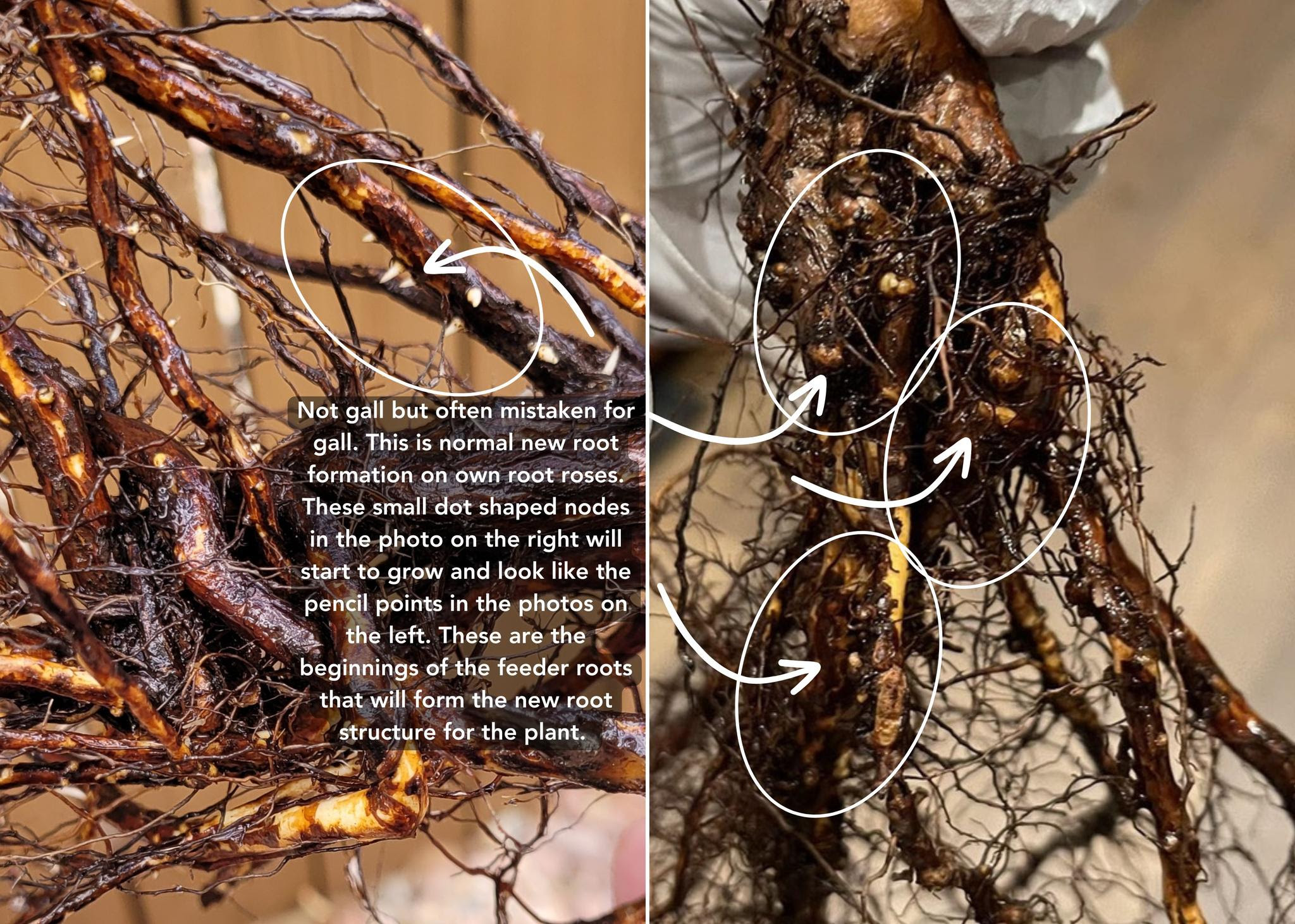
Should I worry about gall?
While crown gall sounds like a menace, its impact depends on the severity of the infection, the variety and the conditions in your garden. Most roses thrive just fine and you likely won't ever know they are infected with gall unless you dig them up and inspect the roots. Severe infections however can significantly weaken a rose, especially in poor soil or high-stress environments. The bacterium can persist in soil for years, potentially infecting future plantings. For an avid rose grower, it's smart to stay vigilant but not paranoid. Routine inspection and proper sanitation can mitigate most risks. No need to run around like the sky is falling!
What should I do when I receive a bare root rose?
Inspect a rose when you receive it and look for unusual growths or swelling around the bud union (on a grafted rose) or roots. Healthy roots should appear uniform without any lumpy tumors or woody galls. (They do look like tumors and trust me when I say that it will be easy to spot if you have one on a plant.) Handle roses carefully to ensure you're not wounding the rose further during planting, as this creates an entry point for bacteria. Treat the roots/plant with a bactericide solution (such as copper-based fungicides, Gallex or Galltroll-A) before planting, especially if you're worried about contaminated soil in your own garden. Consider planting in a new, uninfected location if you've had issues with crown gall before. If you think you've found gall on a rose you received, don't plant it, and contact the supplier to verify if the growth you suspect to be gall actually is.